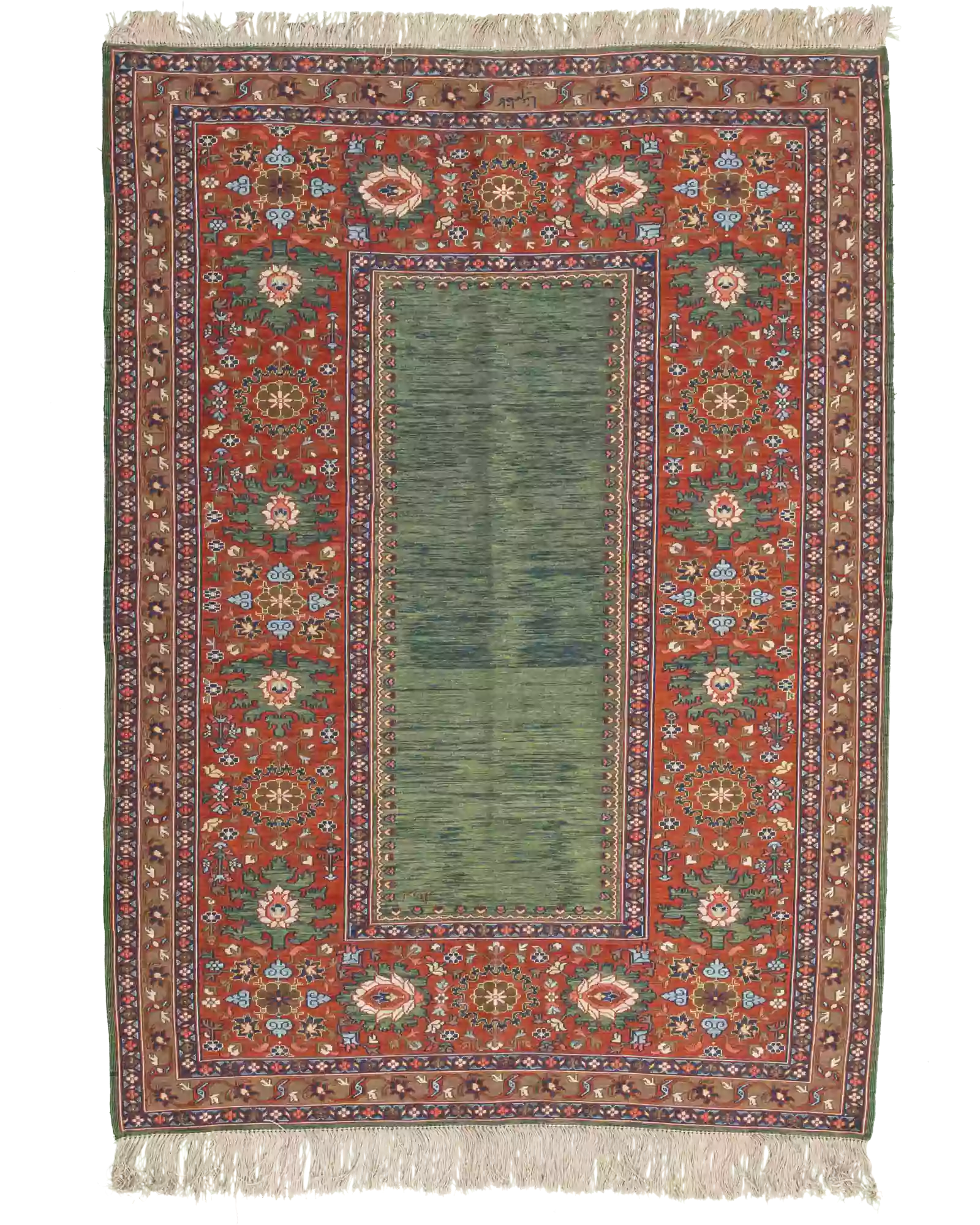
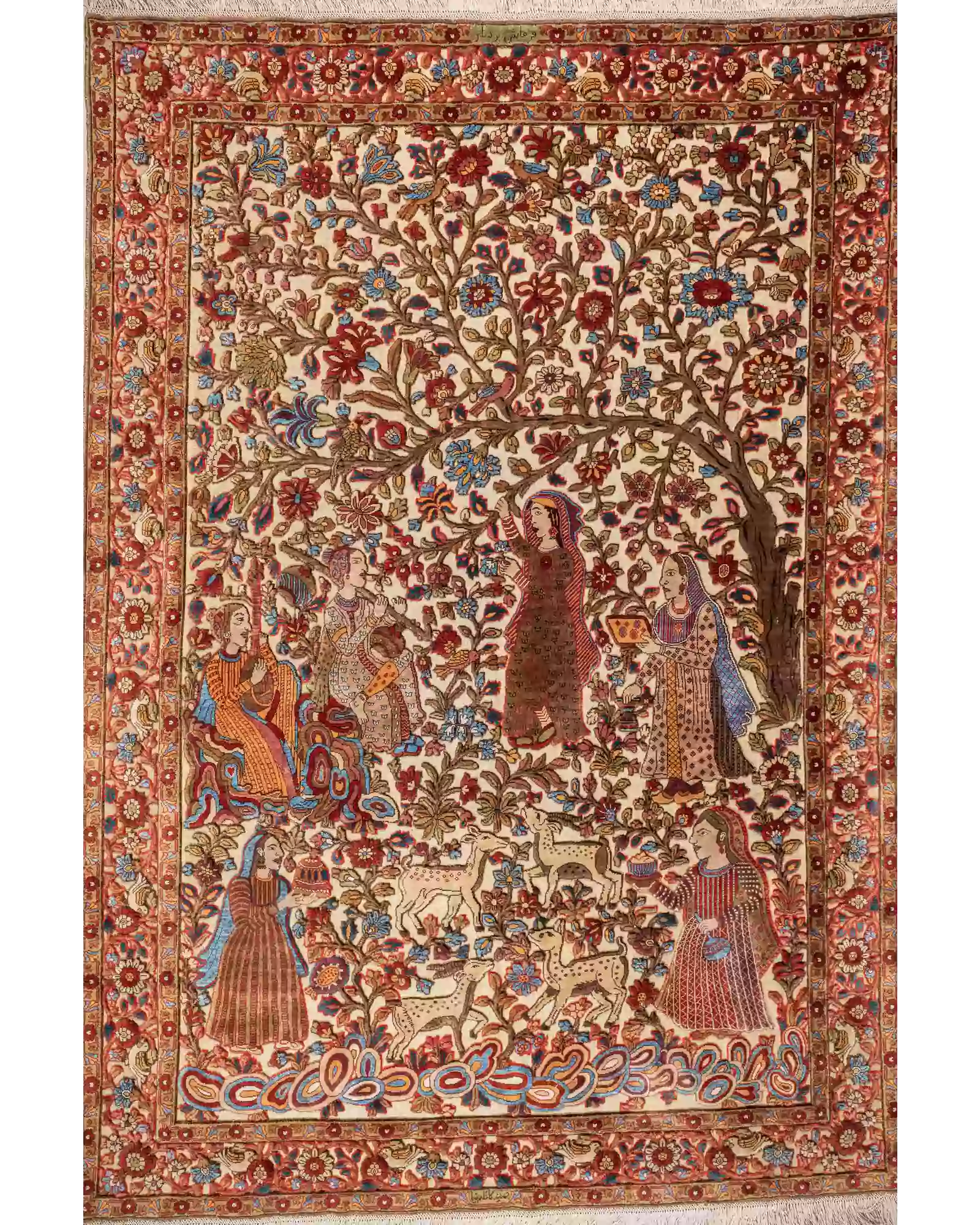
In Persian, Pedar means father; the name and the mihrab design of this carpet were chosen as a mark of reverence and respect for the father. The ivory ground of the mihrab, set among brown motifs and a floral border, is adorned with scrolling branches and symmetrical blossoms.
| Dimensions | 180 × 138 cm |
|---|
The name Pedar and the choice of a mihrab design in this carpet are both intended as a sign of reverence and respect for the father. At the centre of the work, a mihrab with an ivory ground appears, within which blossoms and scrolling branches are arranged in symmetrical order. The dark brown ground surrounding the mihrab brings its form into relief, while the floral border in soft shades of green and pink completes the composition of the carpet.
Polonaise is a name that came into use in Europe for a group of exquisite Persian carpets, especially the silk examples of the Safavid period. Historical examples of this group are renowned for the delicacy of their weave, their soft colours and, in some cases, the use of metal threads. The name does not mean that they were woven in Poland.
This design has also been woven in another version under the name Pedar Carpet, with a red ground, in which the mihrab motif and the idea of reverence for the father have both been preserved. Polonaise Pedar is among the silk weavings of the Bordbar Collection, with Heriz as its place of origin, and measures 180 × 138 cm.